
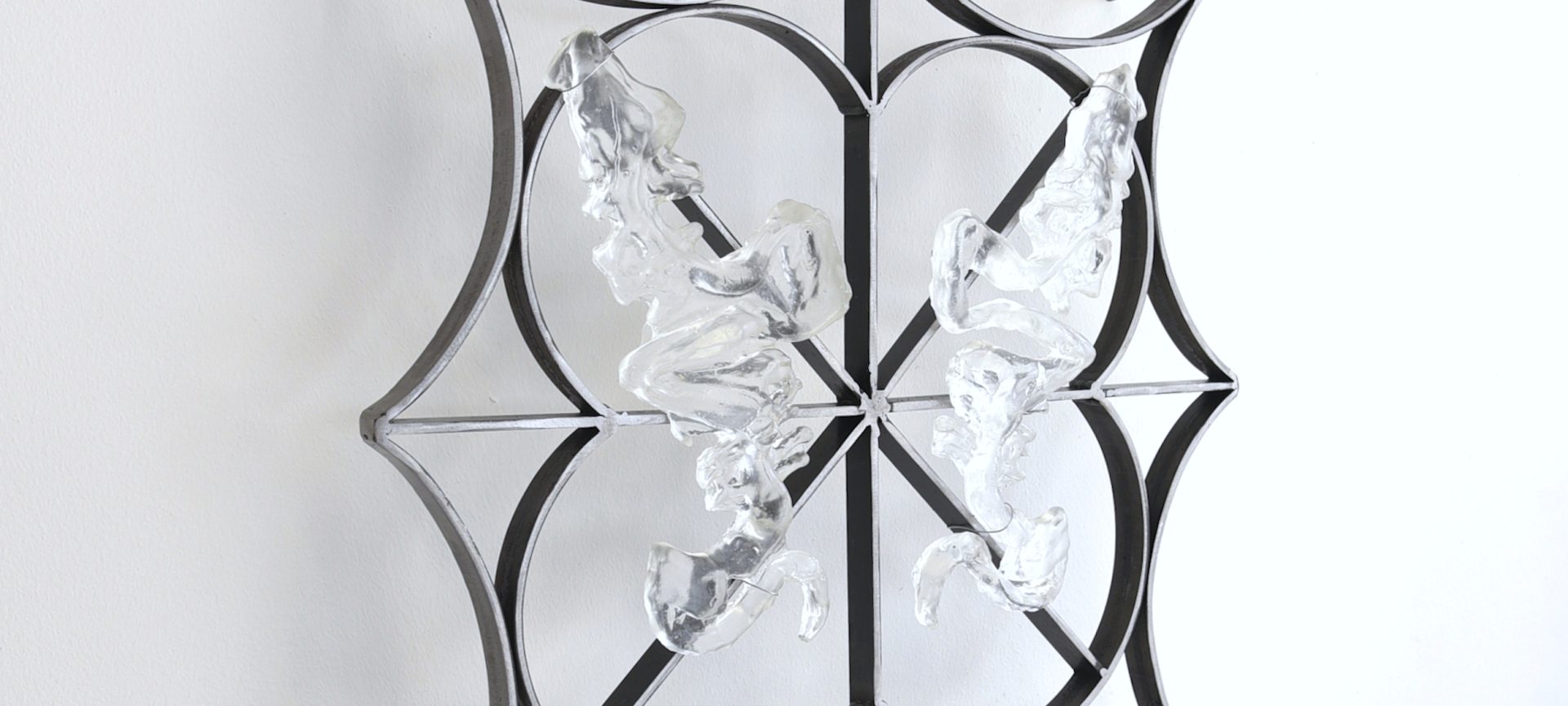
Fanny Varjo: Tongue Stone and Other Truth-Tellers
The health-promoting and destructive uses of poisons have both fascinated and frightened people throughout history, inspiring countless stories and myths.
From the Middle Ages to the modern era, fossilized shark teeth, known as tongue stones (Lat. glossopetrae), were believed to possess powerful antidotal properties. Amulets made from them were dipped into food and wine to detect poison. According to the belief, the shark tooth would sweat or change color when in contact with poison, warning its user of danger. Narwhal tusks, mistaken for unicorn horns, were likewise thought to neutralize poisons. They were used as drinking vessels or ground into food. These practices reflect the period’s observation of nature, mythology, and magical thinking.The sculptures in the exhibition combine steel, glass, wood, hair, and cast aluminium. Varjo is fascinated by the meanings embedded within the materials themselves and by the tensions created through their combinations. Works from the exhibition have previously been shown as part of the larger exhibition Of Tasters, Knights and Gardeners at WAM Kilta Gallery in Turku in late 2025 and early 2026.
BIO
Fanny Varjo (b. 1995) lives and works in Helsinki. She graduated with an MFA from the Academy of Fine Arts at the University of the Arts Helsinki in 2025. Her works are included in the collections of Museum of Contemporary Art Kiasma, Finnish State Art Deposit Collection, WAM Turku City Art Collection, University of the Arts Student Union Art Collection, as well as in private collections. In late 2025, she completed a residency at the Shigaraki Ceramic Cultural Park in Japan, followed by a residency at Cité Internationale des Arts in Paris in early 2026. Varjo is a member of the Finnish Sculptors’ Association and the Turku Artists’ Association.
www.fannyvarjo.com